“Python is not just a programming language; it’s the language of possibilities.”
— Anonymous Developer Insight
In today’s digital world, Python and Machine Learning have become two of the most valuable skills you can learn. Python’s simple syntax makes it the perfect language for beginners, while its powerful libraries fuel some of the biggest advances in artificial intelligence and data science. Whether you dream of building smart AI models, analyzing data, or automating daily tasks, mastering Python is your first step toward success. With the right guidance and a hands-on course, you can go from beginner to machine learning creator — faster than you think.
Table of Contents
🚀 Why Learn Machine Learning and Python in 2025?
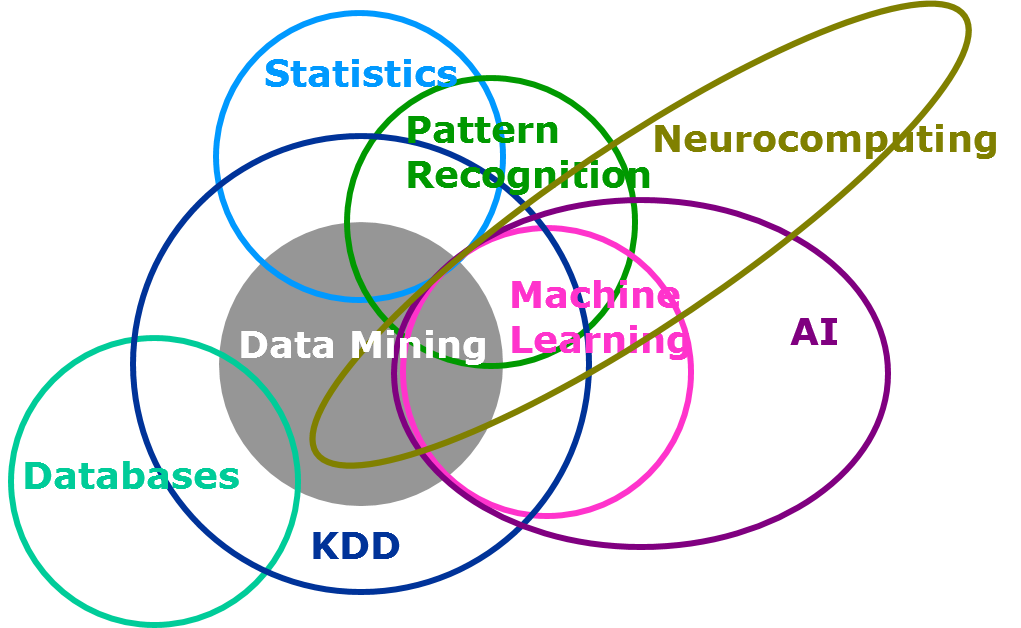
In 2025, Machine Learning (ML) continues to be one of the most in-demand and highest-paying tech skills worldwide. From finance and healthcare to automation and quantum computing, machine learning is revolutionizing how industries operate. According to leading education platforms like Coursera, Udemy, and MIT, the demand for skilled machine learning engineers and Python developers has grown by over 40% this year — and it’s still rising.
Balance your digital life with real-life well-being. Learn practical ways to improve mental clarity, physical health, and daily focus through holistic living. 👉 Read Now → Holistic Living Made Easy: Tips For Mental & Physical Wellness Before diving into advanced topics like ML algorithms, AI models, or neural networks, every learner needs a strong foundation in Python programming — the core language that powers today’s smartest technologies. Learning Python first makes understanding machine learning concepts simpler, faster, and far more effective.
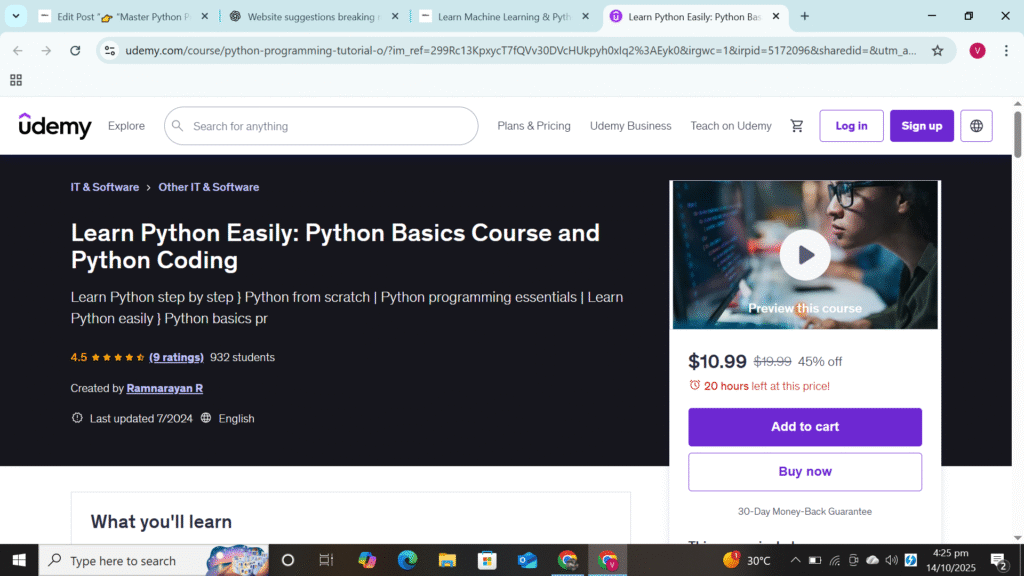
Start your journey toward becoming an AI and ML expert today — begin with Python, and the rest will follow naturally.
🤖 What Is Machine Learning (ML)?
Machine Learning (ML) is a core branch of Artificial Intelligence (AI) that allows computers to learn from data, identify patterns, and make intelligent decisions — all without being explicitly programmed.
Dive into this Machine Learning course.
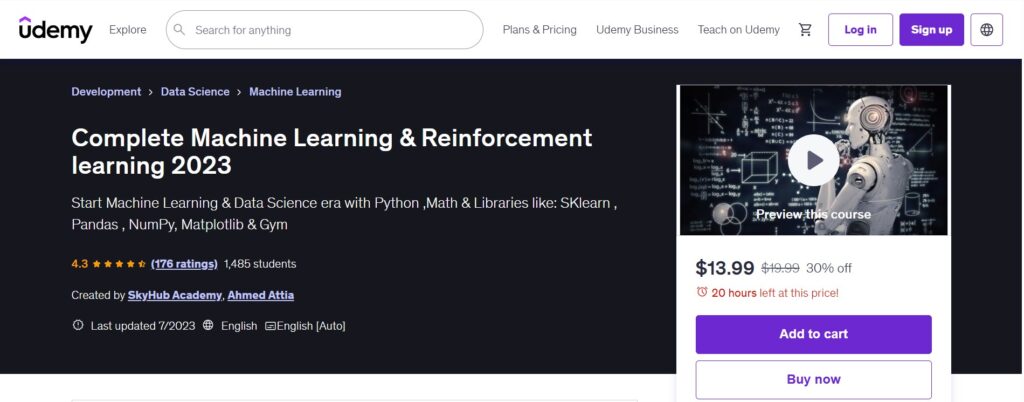
What you’ll learn
- Achieve the mastery in machine learning from simple linear regression to advanced reinforcement learning projects.
- Get a deeper intuition about different Machine Learning nomenclatures.
- Be able to manipulate different algorithms with the power of Mathematics.
- Write different kinds of algorithms from scratch with Python.
- Solve and Deal with different real-life and businesses problems from the outside world.
- Deal with different machine learning and data science libraries like: Sikit-Learn, Pandas , NumPy & Matplotlib.
In simple terms, Machine Learning means teaching computers to recognize patterns and improve performance through experience. It’s the technology behind recommendation systems, self-driving cars, voice assistants, fraud detection, and predictive analytics.
📘 Machine Learning Definition
Machine Learning is a subset of AI focused on algorithms and statistical models that enable systems to analyze data, learn from it, and make accurate predictions or decisions automatically.
🔍 Types of Machine Learning
There are three main types of Machine Learning, each used for different purposes:
1️⃣ Supervised Learning
The model is trained using labeled data (data that already contains correct answers). It’s commonly used in email filtering, credit scoring, and image recognition.
2️⃣ Unsupervised Learning
Works with unlabeled data, helping machines find hidden patterns or groupings without human guidance. It’s often used in customer segmentation and market research.
3️⃣ Reinforcement Learning
A trial-and-error learning approach where an agent learns by receiving rewards or penalties for its actions. It’s widely applied in robotics, gaming, and AI-driven automation.
In short: Machine Learning empowers systems to adapt, evolve, and make smarter decisions — making it one of the most transformative technologies of the modern era.
🧠 Best Machine Learning Courses in 2025
If you’re asking “what is the best machine learning course in 2025?” — here are some top options:
1. Machine Learning by Andrew Ng (Coursera)
- Covers supervised, unsupervised, and reinforcement learning.
- Ideal for beginners using Python and Octave.
- Offers a machine learning certification recognized globally.
2. MIT Machine Learning Online Course
- Advanced program covering ML math, algorithms, and model design.
- Great for those aiming to become a machine learning engineer.
3. Udemy Machine Learning Bootcamp
- Beginner-friendly and project-based.
- Includes ML with Python, TensorFlow, and data visualization.
4. Free Machine Learning Courses
- Google’s Machine Learning Crash Course
- Kaggle Learn Micro-Courses
- YouTube tutorials by freeCodeCamp and Sentdex
💡 Tip: Choose a course that provides certificates, real-world projects, and mentor support.
💻 Learn Machine Learning Online (Step-by-Step Guide)
Here’s a structured path for beginners:
- Start with Python:
Learn Python basics, syntax, data types, and object-oriented programming.- Keywords: python learning course, python for non-programmers, python fundamentals explained.
- Understand ML Concepts:
- Machine learning models
- Decision trees, linear regression, k-means clustering
- Feature engineering in machine learning
- Work on Projects:
- Simple ML projects for beginners (house price prediction, spam classifier).
- Intermediate ML projects (image recognition, sentiment analysis).
- Advanced ML systems (recommendation engines, NLP, chatbots).
- Build a Portfolio:
Upload projects to GitHub, share on LinkedIn, and showcase your machine learning engineer skills.
💡 Practical Uses of Python
Python isn’t just a beginner-friendly language — it’s the engine behind some of the most powerful technologies in the world today. Whether you’re into tech, business, or creativity, Python opens doors to endless opportunities. “Ready to Start Your Python Journey?” This course includes:
- Certificate of completion
- 3.5 hours on-demand video
- Assignments
- 9 articles
- Access on mobile and TV
- Full lifetime access
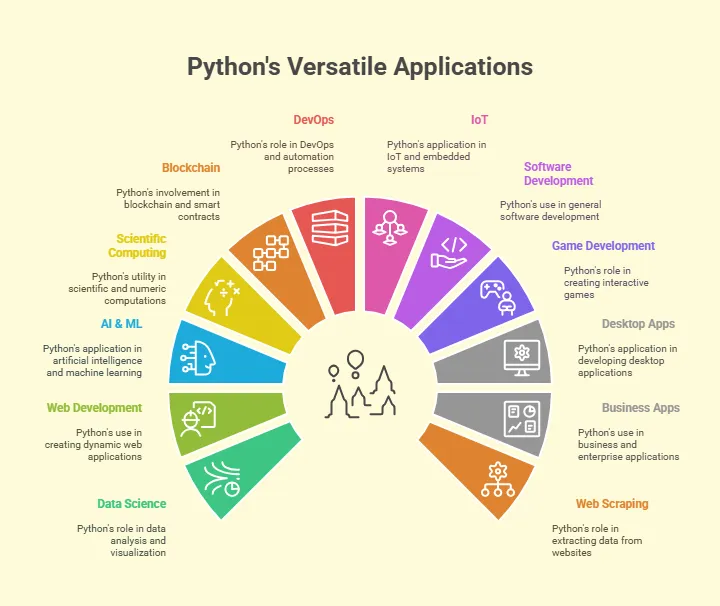
🧠 1. Data Science & Machine Learning
Python is the #1 language for data analysis and AI. Tools like Pandas, NumPy, and Scikit-learn make it easy to clean data, visualize trends, and even build predictive models. Companies like Netflix, Google, and Spotify rely on Python for recommendation systems and analytics.
Learn how AI and machine learning are reshaping healthcare through diagnostics, robotic surgery, and predictive analytics. 👉 Read More → AI In Medicine: 5 Revolutionary Applications To Know
🌐 2. Web Development
Python powers many popular websites and apps through frameworks like Django and Flask. If you’ve ever used Instagram or Pinterest — surprise — both are built using Python! It allows developers to build secure, fast, and scalable web applications easily.
⚙️ 3. Automation & Scripting
Tired of doing repetitive computer tasks? Python can help automate emails, file organization, social media posting, and even data entry. With just a few lines of code, you can save hours of manual work — making it a favorite tool for professionals and small businesses.
🤖 4. Artificial Intelligence & Deep Learning
Python is the foundation for AI innovations. Frameworks like TensorFlow and PyTorch allow developers to build smart chatbots, language models, and even image recognition systems. As we discussed in our AI in Health guide, Python plays a vital role in healthcare innovation.
💼 5. Business Applications
Python is also used in financial analysis, marketing automation, and customer insights. Many companies use Python to make smarter business decisions and manage data more efficiently.
Discover how Artificial Intelligence is transforming personal finance — from automated budgeting to smarter investments. 👉 Explore → Personal Finance 2025 Made Simple & Powerful With AI
🧩 6. Game & App Development
Yes, you can even build 2D or 3D games and mobile apps with Python. Frameworks like Pygame and Kivy make it simple to bring creative ideas to life.
👉 In short: Python isn’t just a programming language — it’s a career accelerator. Once you master the basics, you can apply your skills across almost any industry.
⚙️ Python for Machine Learning: Foundation of ML Engineers
Python remains the most popular programming language for AI and ML development.
Here’s why you should learn Python for machine learning:
- Easy to learn, beginner-friendly syntax.
- Extensive ML libraries: NumPy, Pandas, Scikit-learn, TensorFlow, PyTorch.
- Large open-source community and free learning resources.
Here is another one of the best course of python fundamentals.
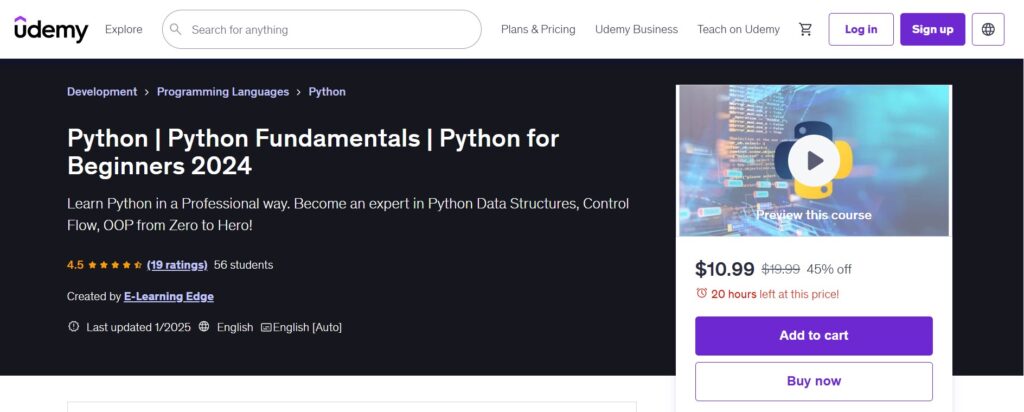
You will be able to conduct Python projects step by step , understanding all the logic and ending with advanced practical examples and complete projects.
You will Gain a fundamental understanding of Python programming and set up a development environment
🔹 Recommended Python Learning Resources:
Include topics like:
- Python Data Structures
- File Handling & APIs
- Object-Oriented Programming in Python
- Python Automation Projects
🧩 Machine Learning Projects for Practice
Practical experience is crucial. Try these:
| Level | Project Idea | Tools |
|---|---|---|
| Beginner | Predict house prices | Scikit-Learn, Pandas |
| Intermediate | Twitter sentiment analysis | NLTK, Python |
| Advanced | Image recognition with CNN | TensorFlow, Keras |
| Expert | Machine Learning in Finance | XGBoost, PyTorch |
🧠 Advanced Topics for ML Engineers
Once you’re comfortable with basics, move to advanced areas:
- Deep Learning and Neural Networks Course
- Machine Learning Pipeline Automation
- Model Deployment Tutorial (ML Ops)
- System Design for Machine Learning
- Quantum Machine Learning
- Machine Learning in Healthcare & Finance
💼 Career Path: Becoming a Machine Learning Engineer
Machine Learning Engineer Jobs are among the highest-paying in tech.
- Average Salary (2025): $120,000 – $180,000/year
- Top Employers: Google, Amazon, Meta, OpenAI, Microsoft
- Skills Required: Python, ML algorithms, statistics, data pipelines, and system design.
💬 Search queries often asked:
- Is it hard to become a machine learning engineer?
- Is machine learning difficult to learn?
- Is machine learning class hard?
👉 Answer: It’s challenging but achievable with consistent practice and project work.
🔍 Comparative Overview: Machine Learning vs Python Courses
| Category | Python Course | Machine Learning Course |
|---|---|---|
| Best Platform | Udemy, Coursera, YouTube | Coursera, MIT, edX |
| Level | Beginner | Intermediate to Advanced |
| Certification | Yes | Yes |
| Skills Gained | Programming | Data Modeling, AI |
| Cost | Free – $50 | Free – $200+ |
📚 Best Books & Resources
- Hands-On Machine Learning with Scikit-Learn & TensorFlow
- Python Crash Course by Eric Matthes
- Machine Learning Yearning by Andrew Ng
- Deep Learning with Python by François Chollet
🧭 Conclusion
Learning Python and Machine Learning in 2025 can open doors to top-tier jobs, research, and startup opportunities.
Start with Python basics, move into machine learning algorithms, and finish with hands-on projects and certifications.
Whether you choose a free machine learning course or an online bootcamp with certificate, consistency and real-world application are the keys to success.
💭 What’s your biggest challenge while learning Python or Machine Learning?
Share your thoughts in the comments — let’s help each other grow together!
1. What is Machine Learning in simple words?
Machine Learning is a part of Artificial Intelligence that allows computers to learn from data and make decisions without being directly programmed.
2. Is Python good for beginners in Machine Learning?
Yes! Python is the easiest and most popular language for beginners. Its simple syntax and vast libraries make learning ML much easier.
3. How long does it take to learn Python and Machine Learning?
With consistent practice, beginners can learn Python in 1–2 months and start basic Machine Learning projects within 3–6 months.
4. What are the main types of Machine Learning?
The three main types are: Supervised Learning, Unsupervised Learning, and Reinforcement Learning, each used for different kinds of data and problems.
5. What Python libraries are used in Machine Learning?
Popular ML libraries include NumPy, Pandas, Scikit-learn, TensorFlow, and PyTorch, which help with data analysis, model building, and AI development.
6. Can I learn Machine Learning without a math background?
Yes, you can start learning basics without deep math knowledge, but understanding statistics, algebra, and probability will help you advance faster.
7. How is Machine Learning used in real-world applications?
ML is used in self-driving cars, healthcare diagnostics, fraud detection, voice recognition, recommendation systems, and predictive analytics.
8. What’s the future of Machine Learning and Python in AI?
Python will remain the backbone of AI and ML development due to its strong community and endless frameworks — making it a must-learn skill for the future.

2 thoughts on “Learn Python Easily: A Step-by-Step Guide for Absolute Beginners”