Overview
This natural substance is made up of nearly 98% pure wax, setting it apart from common vegetable oils. Dermatologists have long recommended using jojoba oil because it provides antioxidant, anti-acne, anti-inflammatory, antifungal, and antimicrobial effects.
The dermatological community advises consumers to incorporate jojoba oil into their skincare routine for its moisturizing ability, acne prevention, and hair and scalp care. Jojoba oil is also non-comedogenic and can be used on the body without causing blocked pores. Moreover, this product serves as a great ingredient for beard care and nail maintenance.
This article will outline what dermatologists would like you to know about jojoba oil benefits, application methods, and necessary precautions before applying it to your skin and hair.
Table of Contents
What makes jojoba oil unique compared to other oils?
Firstly, jojoba oil is not technically an oil. It is a liquid wax ester obtained from the seeds of the jojoba bush, which is indigenous to the southwestern regions of the United States and northern Mexico.
This feature is important since jojoba oil consists of up to 98% pure waxes, such as wax esters, few free fatty acids, alcohols, and hydrocarbons, while conventional plant oils are composed of triglyceride esters. High molecular weight and low viscosity endow jojoba oil with superior lubricating qualities without the greasiness usually associated with lipid substances like lanolin and petrolatum.
It has fast absorption without any residue. Other plant oils tend to stay on the skin’s surface or cause heaviness. According to research, hydrogenated jojoba oil possesses rapid penetration capacity and occlusivity.
The oil comprises vitamin E, vitamin B complex, copper, and zinc. These nutrients promote healthy functioning of the skin and enhance wound recovery. Moreover, jojoba oil is rich in natural antioxidants.
How is jojoba oil comparable to skin sebum?
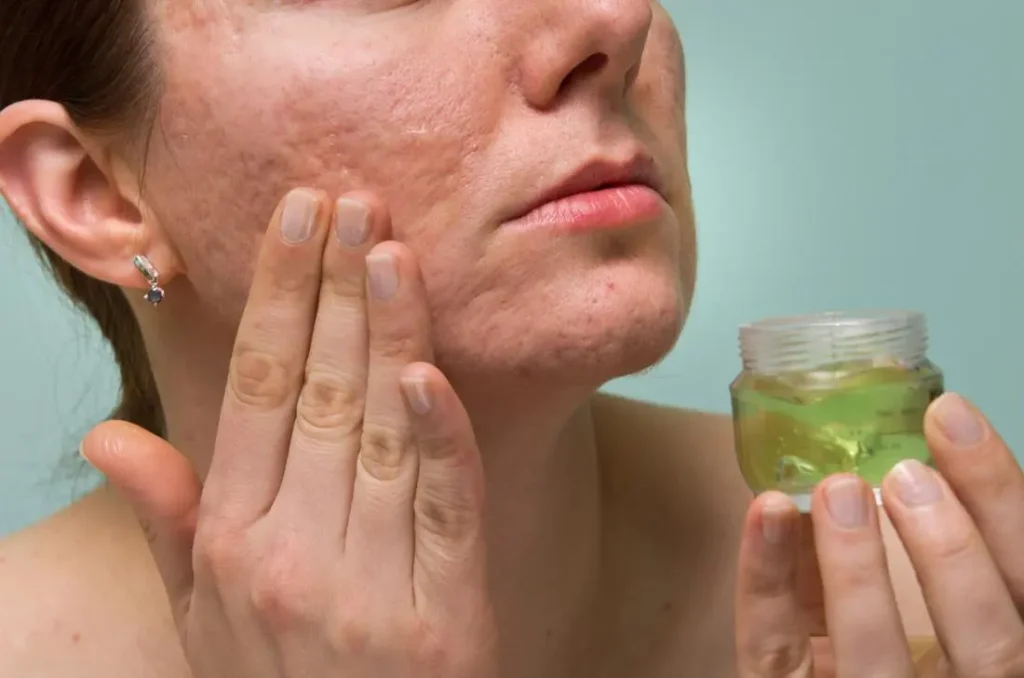
The resemblance between jojoba oil and human sebum is so great that your skin cannot distinguish one from the other. Human sebum has 30% wax esters, which have the same chemical structure as jojoba oil.
The oil is made up of unusually long-chain fatty acids like oleic acid and arachidonic acid. The oils in your skin consist of both short-chain and long-chain fatty acids. Jojoba oil’s range of fatty acids is so diverse that all these fatty acids collaborate to keep your skin hydrated by holding water.
This resemblance sends signals to your sweat and hair follicles. Once you apply jojoba oil on your skin, your skin will feel moisturized, telling your body that there’s no need to produce sebum to keep your skin moisturized. As a result, sebum production is regulated, causing pimples to disappear.
Can jojoba oil be used for skin?
The benefits of jojoba oil include more ways to improve skin health. Jojoba oil will not hydrate skin in excess, leave it oily, or clog pores.
Doctors recommend jojoba oil because it penetrates deep into hair follicles and sebaceous glands with anti-inflammatory molecules. This helps reduce acne. Jojoba oil is rich in anti-inflammatory elements, wound-healing properties, and antimicrobial components.
Research found that jojoba oil improved skin elasticity within 5 minutes and maintained this property for many hours. The oil makes skin smooth and prevents epidermis from shedding excessively.
Since jojoba oil is non-allergenic, it can be applied in dermatitis, dry skin, and atopic eczema conditions. In addition, natural essential oils are rarely allergenic, less than 2% of cases.
Can jojoba oil be effective in treating acne?
Jojoba oil can fight acne through several means. It is rich in antifungal and antimicrobial properties, which work against bacteria such as Staphylococcus aureus responsible for skin infections.
Since jojoba oil is like sebum on the skin surface, this helps send signals to your oil glands telling them to lower the secretion of sebum, thus preventing your pores from getting blocked and resulting in fewer acne.
The oil helps break down sebum trapped inside hair follicles because it penetrates follicles and helps get rid of comedones, thus eliminating blackheads and whiteheads. In a research, participants were found to have significantly reduced cases of inflammation and acne when using jojoba oil combined with clay masks 2-3 times per week.
Jojoba oil is non-comedogenic; hence, it doesn’t block your pores. Because it is similar to the natural oil found on your skin, your skin can easily accommodate it.

Will the use of jojoba oil lighten the skin tone or even hyperpigmentation?
The use of jojoba oil does not lighten the skin, but instead it slowly evens out the skin tone through skin regeneration. There is no scientific proof of the efficiency of jojoba oil in skin whitening.
But there are antioxidants and vitamin E present in jojoba oil which protect the skin from oxidative stress leading to increased melanin formation in the skin cells. This means that it prevents the creation of free radicals that cause damage due to UV radiation and pollution.
Is jojoba oil good for anti-aging?
Jojoba oil helps slow aging signs. Studies show it increases skin suppleness, with effects persisting over time. Continued use reduces superficial facial lines.
The oil stimulates collagen production through copper and zinc content. Collagen maintains skin structure and elasticity. Additionally, vitamin E improves elasticity and hydration, combating fine lines and wrinkles.
Does jojoba oil work as a face moisturizer?
Jojoba oil functions as both an emollient and humectant, attracting water to skin and locking moisture in. This dual action makes it suitable for dry and oily skin types.
What about jojoba oil for body care?
Jojoba oil moisturizes skin from head to toe without clogging pores. You can apply it to dry cuticles, feet, and body for immediate hydration.
How to apply jojoba oil on your hair and scalp
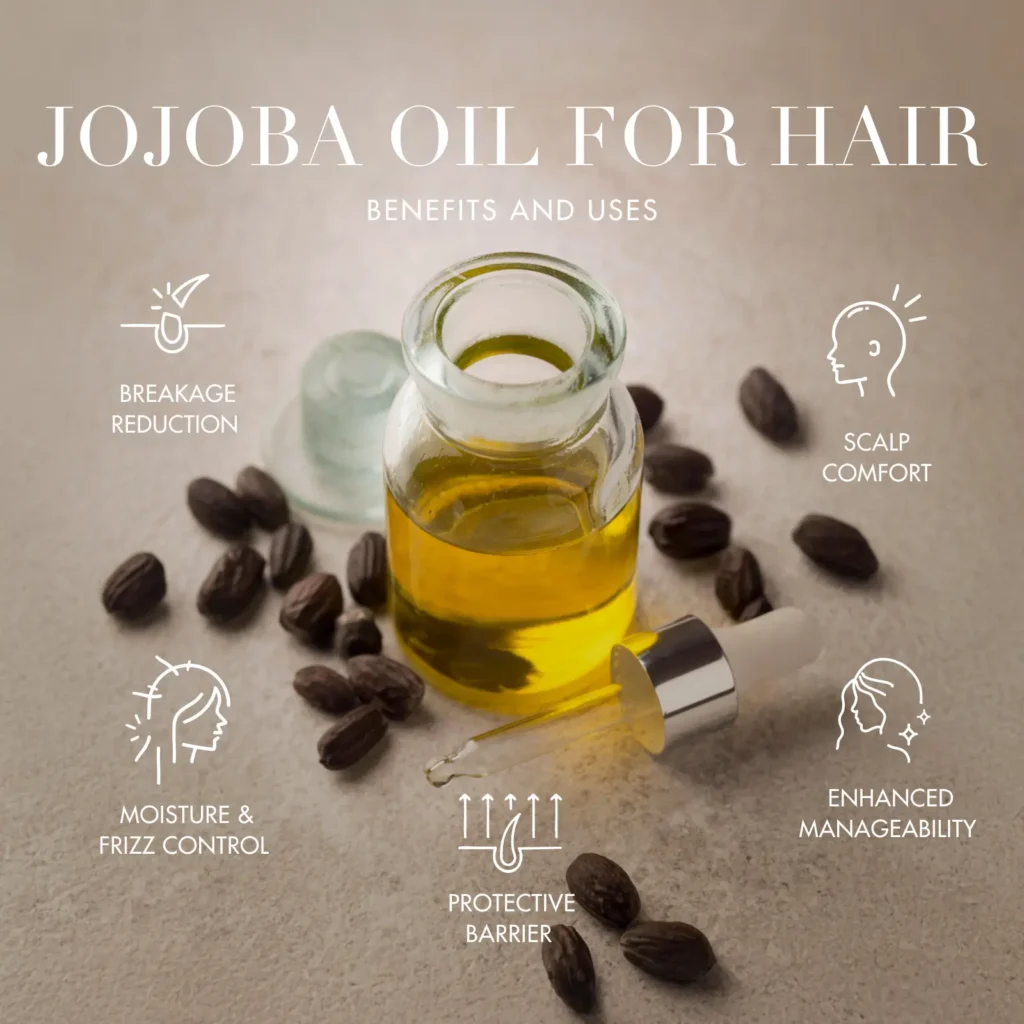
Put 1 tablespoon of heated jojoba oil for short hair and 2 tablespoons of heated jojoba oil for long hair. Rub your hair from the scalp up to the tips, wait 20 minutes, then wash and rinse. For deep conditioning while your hair is wet, you need a coin-sized amount. Let it sit for 5 to 10 minutes and wash your hair regularly.
Apply jojoba oil to your scalp before washing your hair to reduce dryness and fight dandruff. Include 3 to 5 drops of jojoba oil in your shampoo or conditioner to combat dryness, breaking, and splits. On application to your scalp, apply just one or two drops.
Application of jojoba oil for growing a beard
A few drops of jojoba oil (5-10) must be applied to the wet beard each day. The amount depends on the length of the beard: 1-2 drops for stubble, 3-5 drops for a short beard, and 5-10 drops for medium or long beards. Heat up the oil between your hands prior to application.
Is jojoba oil good for nails?
Massage jojoba oil into your cuticles once in the morning and once in the evening. Apply after washing your hands to prevent drying. You can also apply before painting nails or before bed for overnight treatment.
Best practices for using jojoba oil for skin
Apply 1-3 drops after cleansing, pressing into areas that feel dehydrated. Use before moisturizer for lighter feel or after to seal everything in overnight. Always finish with sunscreen in the morning.
Who should not use jojoba oil?
Anyone allergic to seeds and their oils must steer clear from jojoba oil. The few individuals sensitive to wax esters might also be sensitive to jojoba oil.
A person with an active condition in the scalp, such as fungal dandruff, seborrheic dermatitis, or folliculitis, must exercise caution. Oil application tends to aggravate the problem. Someone with allergies to several plant derivatives requires patch tests before using jojoba oil.
Can there be allergic reactions to jojoba oil?
It is quite rare for a person to have an allergic reaction to jojoba oil. Irritant contact dermatitis is common, but not true allergies.
Contact dermatitis is possible. There may be instances when some people develop hives and swelling on their ears and feet from using jojoba oil too much.
When to consult a dermatologist
Seek medical help if you experience severe swelling of lips, eyelids, or face, difficulty breathing, or rapid spreading rash. Persistent scalp sores or hair loss in defined patches also require professional evaluation.
Conclusion
Jojoba oil stands out as a dermatologist-approved ingredient that truly delivers. Its unique wax ester structure mimics your skin’s natural sebum, making it effective for acne, anti-aging, and hydration without clogging pores.
“What’s your biggest skincare struggle right now? Let’s talk below 👇”
Do dermatologists actually recommend using jojoba oil for skincare?
Yes, dermatologists recommend jojoba oil because it closely resembles the natural sebum your body produces. It’s a lightweight oil that effectively seals in moisture and reduces water loss from the skin, helping to strengthen the skin barrier and maintain healthy hydration levels.
Can jojoba oil help prevent or treat ingrown hairs?
Jojoba oil can help with ingrown hairs due to its antibacterial and anti-inflammatory properties. It combats bacterial growth within hair follicles while soothing irritated skin. Using it as part of your skincare routine can reduce razor burn and improve overall skin health in areas prone to ingrown hairs.
How does jojoba oil compare to rosehip oil for different skin types?
The choice between jojoba and rosehip oil depends on your specific skin needs. Rosehip oil works best for dry, mature, or sun-damaged skin, while jojoba oil is particularly effective for oily or acne-prone skin due to its sebum-regulating properties and non-comedogenic nature.
Will jojoba oil clog my pores or cause breakouts?
No, jojoba oil is non-comedogenic, meaning it won’t clog pores. Because its structure is so similar to your skin’s natural oil, your skin processes it the same way without triggering breakouts. Breakouts from jojoba oil are uncommon and typically only occur from over-application.
