Imagine looking in the mirror and seeing fuller hair and firmer, smoother skin staring back at you. That transformation may not come from magic — but from science. Peptides, tiny chains of amino acids, are powerful ingredients that help support your body’s natural repair and renewal processes in both skincare and haircare.
From copper peptides for skin rejuvenation to peptides designed to stimulate hair growth, these bioactive compounds offer research-backed solutions for thinning hair, fine lines, and loss of elasticity. In this guide, we’ll explore the benefits of peptides for skin, the best peptides for tightening and anti-aging, and how peptides can improve hair growth and thickness. We’ll also cover potential limitations, side effects, collagen peptides for hair, and advanced options like GHK-Cu peptide injections. Peptides work with your biology — not against it — stimulating natural repair mechanisms that can improve skin elasticity and enhance hair density over time.
Table of Contents
What Are Peptides?
Peptides are short chains of amino acids, the building blocks of proteins like collagen and keratin. In skincare and haircare, they act as messengers, signaling cells to boost production of essentials for firmness and growth.
Think of a peptide as a coach whispering instructions to your skin and scalp cells. They’re gentle, often derived naturally, and suit most types.
How Do Peptides Benefit Skin?
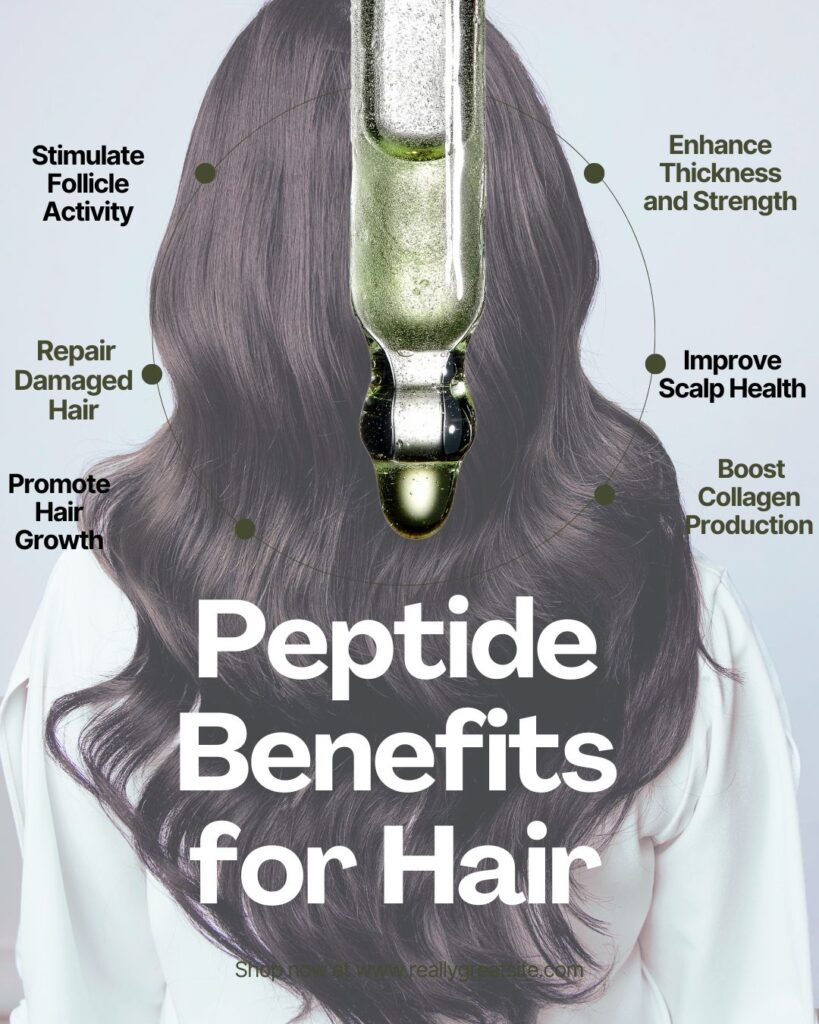
Peptides offer multifaceted advantages for hair health:
Explore the benefits of vitamin E oil for skin and hair, including improved hydration, enhanced healing, reduced scars, and natural antioxidant protection.
What Are the Peptides Types for Skin?
Peptides types for skin fall into categories based on function. Signal peptides, like Matrixyl, boost collagen. Carrier peptides, including copper ones, deliver minerals for repair.
Enzyme inhibitors prevent breakdown, while neurotransmitter types relax muscles for a Botox-like effect.
- Signal: Firmness enhancers
- Carrier: Nutrient transporters
- Inhibitor: Protection specialists
- Neurotransmitter: Wrinkle smoothers
Choose based on needs – mix for best results. (Source; BioHacker)
Copper Peptides for Skin: Why They’re a Star?
Copper peptides for skin, like GHK-Cu or ghkcu peptide, excel in healing and anti-aging. For further details about peptides for skin read out this article.
In a 2025 study on cosmeceuticals, copper peptides (GHK-Cu) enhanced collagen, elastin, and wound healing. At low concentrations (0.01 nM), they upregulated MMPs and TIMPs, boosting skin integrity. Commercially, they’re in anti-aging creams, with evidence of reduced wrinkles. In a mini case study, a 45-year-old woman in Lahore applied copper peptide serum daily; after 8 weeks, her fine lines softened noticeably.
Best Peptides for Skin Tightening: Top Picks?
Best peptides for skin tightening include GHK-Cu and Matrixyl. They promote firmness by stimulating elastin and collagen, addressing loose skin.
Argireline relaxes expressions for smoother results. Combine with retinol for max effect.
Direct answer: For dramatic tightening, try injectable peptides like ghk-cu peptide injection under professional guidance.
Limitations of Peptides: What to Watch For?
Limitations of peptides include poor absorption in topicals, needing advanced formulas. Results take time – not overnight miracles.
Overuse might irritate sensitive skin. They’re pricier than basic ingredients.
Despite this, they’re safer than many actives, with minimal downtime. Learn how argan oil nourishes dry skin and damaged hair with essential fatty acids and vitamin E, helping restore softness, shine, and elasticity naturally.
Can Everyone Use This?
Peptides suit most, including sensitive and acne-prone skin. They’re gentle for men and women. Pregnant folks or those with hormone issues should consult doctors. Start slow to test tolerance.
They’re available online or in pharmacies – always check quality.
Peptides for Hair Growth: Do They Really Work?
Peptides for hair growth target follicles, extending the growth phase for thicker strands. Hair growth peptides like GHK-Cu reduce shedding and boost density. A 2022 study on fish collagen peptides (CPs) promoted hair regrowth in human dermal papilla cells and mice via Wnt/β-catenin and BMP pathways. Mice showed faster anagen phase entry; human cells proliferated 20% more, suggesting thickness gains. Source: ( NIH)
Users on Reddit share stories of regrowth after months. Peptide for hair growth suits men and women facing thinning.
Bold key takeaway: Peptides offer a natural alternative to harsh chemicals for fuller hair.
What Is the Mechanism and How Do They Promote Growth?
How do they encourage growth, and what is the mechanism? Peptides activate growth factors like VEGF, decrease inflammation, and increase blood flow. They prolong the anagen phase by imitating follicle signals. Stronger, longer hair cycles result from this.
Marine collagen peptides have been shown to increase papilla cell proliferation through Wnt pathways. Discover how AI in skincare is transforming personalized beauty routines through skin analysis, ingredient matching, and smart product recommendations for better, faster results.
Medical Research on Peptides for Hair Growth
Emerging research supports peptides’ role in hair restoration. A 2023 study highlighted copper peptides’ ability to promote healthy hair growth with minimal side effects, though calling for more trials. Another 2022 PMC article on fish-derived collagen peptides demonstrated significant hair regrowth in mice and enhanced proliferation in human dermal papilla cells via Wnt/β-catenin and BMP pathways.
A 2025 review in Modern Aesthetics emphasized GHK-Cu and BPC-157’s regenerative effects, including follicle stimulation and reduced inflammation. Clinical trials, like a 2021 study on biotin peptides, showed improved hair density after consistent use. While promising, experts note that long-term human studies are needed to fully validate efficacy
Best Peptides for Hair Growth and Thickness?
Best peptides for hair growth and thickness are GHK-Cu and collagen peptides. Peptide for hair regrowth like biotinoyl tripeptide-1 anchors strands.
Best injectable peptide for hair growth? GHK-Cu or bpc 157 peptide for deeper repair.
- GHK-Cu: Follicle stimulator
- Collagen: Thickness booster
- BPC-157: Inflammation fighter
Peptide for hair loss works for both genders.
Collagen Peptides for Hair: Boost from Within?
Collagen peptides for hair provide building blocks for keratin, improving strength and reducing breakage.
Hydrolyzed collagen peptides absorb easily, promoting regrowth in studies.
A 2024 trial showed women with thinning hair gained elasticity after 12 weeks.
Types of Peptides for Hair Growth
Several peptides stand out for their hair-boosting properties. Here’s a breakdown in a handy table:
| Type | Description | Key Benefits |
|---|---|---|
| Copper Peptides (GHK-Cu) | Naturally occurring peptides that deliver copper to follicles. | Stimulates growth, reduces inflammation, strengthens hair shafts—often called the best peptide for hair growth. |
| Collagen Peptides | Derived from sources like fish or bovine collagen. | Enhances scalp health, promotes regrowth, improves thickness and elasticity. |
| Biotinoyl Tripeptide-1 (Biotinyl-GHK) | Biotin-linked peptides. | Supports hair anchoring, reduces shedding, aids in thicker growth. |
| Signal Peptides (e.g., Palmitoyl Tetrapeptide-20, Acetyl Tetrapeptide-3) | Mimic natural signals to boost keratin. | Strengthens hair, improves fullness, targets thinning areas. |
| BPC-157 | Synthetic healing peptide. | Accelerates tissue repair, reduces scalp inflammation for better growth environment. |
| Keratin Peptides | Protein-based for structural support. | Repairs damaged hair, enhances shine and resilience. |
These can be found in topical serums, shampoos, or oral supplements, with copper and collagen being the most researched.
Best Collagen for Women: Tailored Choices?
Best collagen for women often includes types I and III, like hydrolyzed peptides with biotin.
Vital Proteins or marine sources suit hormonal needs, supporting skin, hair, and bones.
Women in Lahore can find them via Daraz for easy access.
Side Effects: What Risks to Know?
Side effects of peptides are mild – irritation, redness, or allergies.
For hair, rare digestive issues from orals. Injectables might cause swelling.
Patch-test and start low. Most tolerate well, but stop if reactions occur.
Bold key takeaway: Peptides are safe for many, but monitor and consult experts.
Wrapping Up: Your Peptide Journey Starts Now
Peptides do for skin and hair what nature intended – repair and renew. From best peptides to collagen, they’ve got you covered. Incorporate them wisely for transformations.
Ready for glowing skin and lush locks? Grab a peptide serum or consult a derm today – your best self awaits!
FAQS
What peptide treatments do salons offer for hair strengthening?
Salons offer peptide-based treatments that strengthen weak and thinning hair by improving scalp health and supporting follicles. Common options include peptide scalp serums, repair masks, ampoule therapies, and microneedling with peptide solutions. These treatments help boost collagen production, enhance blood circulation, and reduce hair breakage. Many hair spas also combine peptides with keratin treatments to improve overall hair strength and resilience.
Are there shampoos with peptides effective for hair loss?
Yes, many shampoos contain bioactive peptides that help support scalp health and reduce hair thinning. Peptide shampoos work by reinforcing hair follicles, improving scalp moisture balance, and supporting the natural growth cycle. While they do not replace medical hair loss treatments, regular use may reduce breakage and improve hair thickness. For better results, they are often used with peptide serums or scalp treatments.
What are the benefits of peptides for hair health?
Peptides support hair health by strengthening follicles and improving scalp function. Key benefits include:
- Stimulating collagen production
- Improving blood circulation to hair roots
- Strengthening hair strands
- Reducing breakage
- Supporting healthy hair growth cycles
- Enhancing scalp hydration
With consistent use, peptides can promote thicker, stronger, and healthier-looking hair.
What are peptides in hair care products?
Peptides are short chains of amino acids that serve as building blocks of proteins like keratin and collagen. In hair care products, they help reinforce hair fibers and improve scalp condition. Peptides send signals to hair follicles to function more efficiently, making them popular ingredients in shampoos, conditioners, and scalp serums.
How long does it take for peptides to show results on hair?
Peptide hair products typically show noticeable results within 6 to 12 weeks of consistent use. Because hair grows in cycles, improvements such as reduced breakage, better scalp health, and increased thickness appear gradually. Continued use is important for maintaining visible results.
Are peptide hair products safe for daily use?
Most peptide-based shampoos and serums are safe for regular use. They are designed to support and nourish hair rather than cause damage. However, individuals with sensitive scalps should check ingredient labels and follow product instructions carefully before daily application.
Can peptides help with thinning hair?
Peptides may help improve thinning hair by strengthening strands and supporting follicle activity. They create a healthier scalp environment, which can enhance hair density and reduce breakage. Although they are not a cure for severe hair loss, consistent use may result in fuller-looking hair over time.
